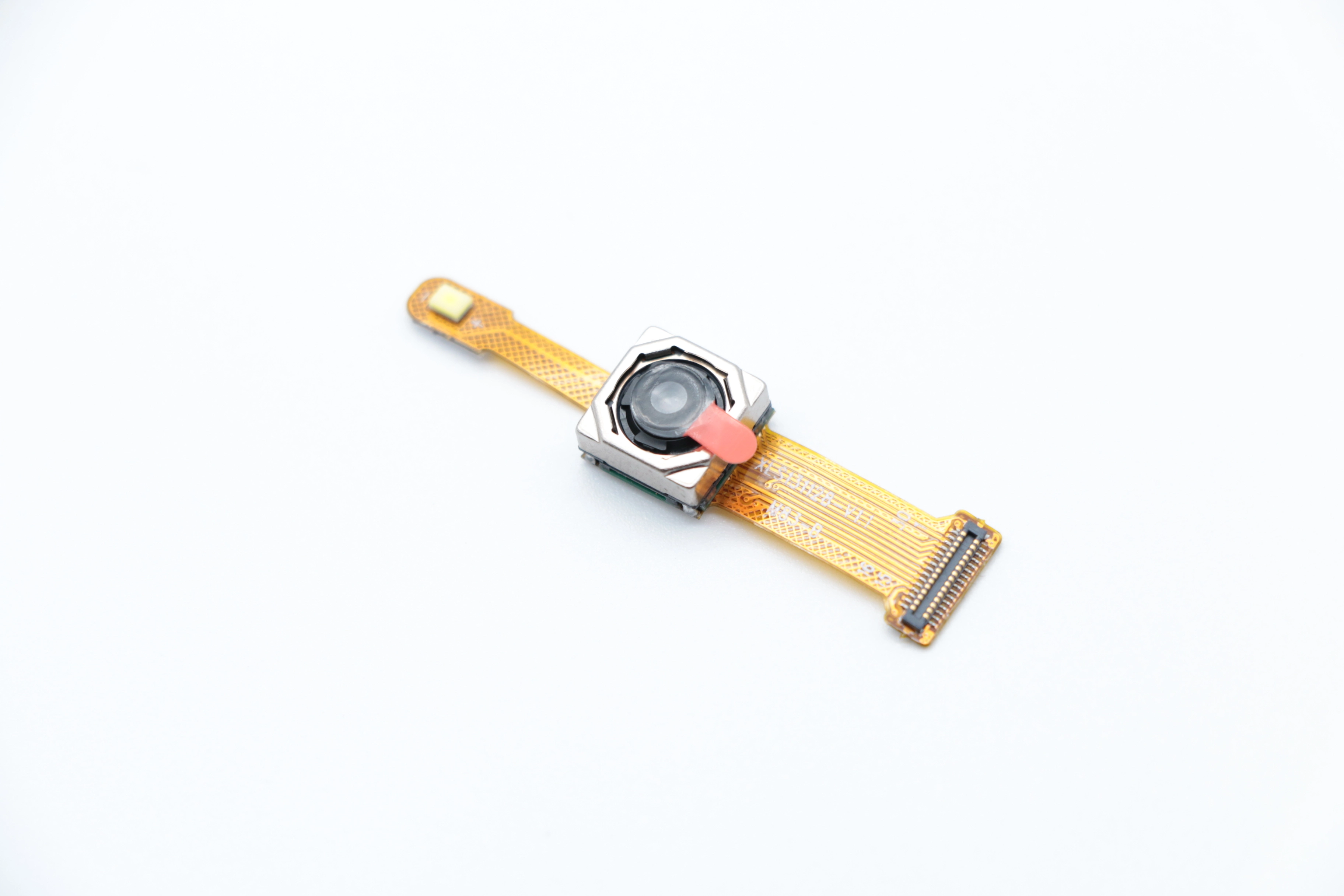
CK-586-V2.0 is a Sony IMX586 48mp camera module designed for high-resolution embedded imaging through a MIPI CSI-2 interface. The listed IMX586 sensor mode supports a maximum active image size of 8000 × 6000, with RAW10, RAW8 or COMP8 output subject to the selected configuration. The standard module uses a rolling-shutter sensor and an autofocus lens structure.
This is a RAW mipi csi 2 camera modules solution rather than a plug-and-play USB or UVC camera. The host platform must provide a compatible MIPI CSI-2 receiver, sensor driver and ISP pipeline. The final resolution, frame rate, output format, autofocus behavior and image quality depend on the sensor mode, MIPI lane configuration, host processor, driver, ISP, firmware and available processing and memory bandwidth.
CK Vision can evaluate customization of mipi csi 2 camera modules, including the FPC or PCB outline, connector and pinout, lens, field of view, autofocus range, cable length and image-quality parameters according to the customer's enclosure and processor platform. LED illumination is an optional customization and is not included in the standard CK-586-V2.0 module; its position, brightness, color, power and control method must be confirmed for the intended working distance and enclosure.
Customers comparing sensor resolutions, focus options and interface requirements can review CK Vision's MIPI camera module solutions before selecting a module for customization.
CK-586-V2.0 IMX586 Camera Module Specifications
The following specifications describe the standard CK-586-V2.0 configuration and relevant Sony IMX586 sensor capabilities for high-resolution mipi csi 2 camera modules. Sensor-level interface modes, frame rates, power and temperature values do not automatically represent the guaranteed output of every finished module or host platform. Final operation must be confirmed using the selected FPC or PCB, connector, lens, processor, driver, ISP and firmware.
Specification boundary: Low-light performance, distortion, frame rate and image quality depend on the selected lens, sensor mode, exposure, illumination, interface, host ISP and test method. Confirm these items using the final sample configuration rather than treating a sensor reference value as a guaranteed module result.
48MP Sensor Mode and Frame-Rate References
Sony IMX586 supports multiple sensor modes for high-resolution capture, pixel binning, HDR and high-speed operation. The values below describe sensor-level mode references. They do not guarantee that the standard CK-586-V2.0, a custom FPC or a particular processor can output every mode without additional driver, PHY, ISP and bandwidth validation.
A 48MP sensor does not mean that every application should continuously operate at 48MP. The best mode depends on required detail, lighting, exposure time, frame rate, CSI bandwidth, ISP capacity, system memory and processing latency.
RAW10 vs RAW8 vs COMP8 Output
Output selection affects image-processing flexibility, interface bandwidth and host compatibility. The exact format must be supported by both the selected IMX586 mode and the processor's CSI receiver and ISP pipeline.
RAW10 does not automatically guarantee a better finished image than RAW8. Lens quality, lighting, exposure, sensor configuration and ISP processing still determine the final result.
MIPI CSI-2 Host Integration Requirements
CK-586-V2.0 is a RAW MIPI module, not a plug-and-play USB or UVC camera. The host must receive the sensor stream, control the sensor and autofocus hardware, and process the RAW image data.
For general sensor, interface and host-selection guidance, review CK Vision's MIPI camera module solutions. If a selected sensor is detected but cannot stream reliably, see the camera sensor debugging workflow.
Converting the MIPI RAW stream into a computer-compatible USB camera output requires an additional USB bridge or image processor, suitable firmware and sufficient interface bandwidth.
Autofocus, Lens and Working-Distance Selection
The standard CK-586-V2.0 uses an M6 autofocus lens with an approximate focus range from 5 cm to infinity. Autofocus performance depends on the lens, VCM, driver IC, host control interface, focus algorithm, lighting and target contrast. The stated focus range should be validated in the final enclosure and working environment.
A different lens can change the field of view, distortion, module height, focus range and amount of detail delivered to the 48MP sensor. For a custom optical evaluation, provide the required horizontal or diagonal FOV, minimum and maximum working distance, target size, enclosure window, illumination and available module height.
Fixed-focus, autofocus and application-specific focus configurations may be evaluated, but a lens selected only by focal length may not resolve sufficient detail for the intended high-resolution application.
Optional LED Illumination and OEM Customization
LED illumination is not included in the standard CK-586-V2.0 module. Visible-light or IR illumination can be evaluated as an optional custom design when the application requires controlled close-range lighting. The LED specification must be selected according to wavelength or color, working distance, target reflectivity, lens FOV, required brightness, available power and enclosure space.
Mechanical customization
FPC or PCB outline, mounting points, cable direction, connector position and enclosure fit
Electrical customization
Connector, pinout, PHY configuration, power design and optional LED control
Optical customization
Lens, FOV, working distance, focus range, IR filter and illumination layout
Platform customization
Sensor mode, register configuration, host integration and image-quality evaluation
LED position and brightness must be tested with the final lens and enclosure window. Incorrect geometry or excessive illumination can create reflections, glare, hotspots, overexposure and additional heat.
Potential Applications
The IMX586 camera module may be suitable for projects that need high-resolution RAW capture and have a compatible host processing platform. Potential applications include:
High-detail document, label or surface capture
Embedded imaging systems requiring digital cropping
Controlled close-range imaging with optional illumination
Research and high-resolution image-acquisition platforms
Machine-vision development requiring RAW sensor data
Custom terminals requiring autofocus and compact optics
Application suitability must be validated using the required working distance, lighting, motion, frame rate, enclosure, processor and image-quality criteria. Sensor resolution alone does not prove that a module meets a specific inspection or recognition target.
48MP IMX586 Camera Module FAQ
Is CK-586-V2.0 a USB camera?
No. It is a RAW MIPI CSI-2 camera module. Direct connection to a standard computer USB port requires an additional USB bridge or image processor, compatible firmware and sufficient bandwidth for the selected output mode.
Does the IMX586 camera module require platform integration?
Yes. The host normally requires IMX586 initialization and mode control, MIPI CSI-2 receiver configuration, power and clock control, ISP integration and autofocus control. Exact work depends on the processor, OS, kernel/BSP, board and selected mode.
Can the module output 8000 × 6000 at 30 fps?
IMX586 documentation lists a full-resolution sensor mode with an up-to-30-fps reference. Actual module and system output must still be verified against the register mode, RAW format, PHY and lane configuration, host receiver, ISP, memory bandwidth and thermal conditions.
Does 48MP automatically mean 8K video?
No. A 48MP sensor image size does not guarantee a standardized 8K video mode, a particular aspect ratio or a specific frame rate. Video output depends on the selected crop, sensor mode, interface and complete host pipeline.
What is the difference between 48MP and pixel-binning modes?
The 48MP remosaic mode prioritizes maximum image detail and requires more transport and processing resources. Binning modes reduce or crop the output and can support faster or more efficient operating modes. Exact image quality and sensitivity depend on the sensor configuration, exposure and ISP processing.
Does the standard module include LED illumination?
No. LED illumination is an optional customization. Visible-light or IR options require confirmation of wavelength or color, working distance, power, thermal design, lens FOV, enclosure space and control method.
Does the module support autofocus?
The standard configuration uses an autofocus lens with an approximate 5 cm-to-infinity focus range. Actual performance depends on the VCM, control interface, focus algorithm, lens, lighting, target contrast and enclosure.
Can the FPC, connector and pinout be customized?
Yes, subject to electrical, signal-integrity and mechanical review. Provide the host-board schematic, connector definition, required PHY and lane configuration, cable direction and enclosure drawing for evaluation.
What information is required for a custom sample?
Provide the processor or SoC, OS and BSP/kernel version, D-PHY or C-PHY configuration, connector pinout, required resolution and frame rate, RAW format, enclosure and FPC drawings, lens FOV, working distance, focus requirement, optional illumination specification, prototype quantity and estimated production demand.
Request an IMX586 Module Compatibility Evaluation
Send your processor or development-board model, OS/BSP, PHY and lane configuration, required resolution and frame rate, RAW format, enclosure drawing, lens and working-distance requirements, autofocus configuration and optional LED specifications. CK Vision will review the optical, mechanical, electrical and platform-integration requirements before recommending a sample configuration.
Features of 48MP MIPI CSI2 Camera Module with LED
Key Features of the CK-586-V2.0 IMX586 Camera Module
The CK-586-V2.0 combines the Sony IMX586 image sensor with a customizable MIPI CSI-2 camera module design for high-resolution embedded imaging. The final output mode, frame rate and image quality depend on the selected processor, MIPI interface, driver, ISP, lens and firmware.
48MP Sony IMX586 Image Sensor
Built around the Sony IMX586 stacked CMOS image sensor with a maximum sensor image size of 8000 × 6000 for applications requiring detailed image capture, digital cropping or high-resolution inspection.
MIPI CSI-2 RAW Output
Supports configurable RAW10, RAW8 and COMP8 sensor output. A compatible MIPI CSI-2 receiver, IMX586 driver and host ISP are required to process the image data.
Flexible Resolution and Sensor Modes
The IMX586 supports full-resolution, pixel-binning, HDR and high-speed sensor modes. Available modes must be verified against the host processor, MIPI bandwidth, driver, ISP and memory capacity.
Autofocus and Lens Customization
The standard configuration uses an autofocus lens. Lens FOV, focal length, focus range, IR filter and fixed-focus or autofocus configuration can be evaluated according to the imaging distance and enclosure.
Custom FPC, PCB and Connector Design
The FPC or PCB outline, connector type, pin definition, cable direction and mounting position can be customized after reviewing the customer’s host board and mechanical drawings.
Optional LED Illumination
Visible-light or infrared LED illumination can be evaluated as an optional customization. LED illumination is not included in the standard CK-586-V2.0 module and requires separate power, thermal and optical validation.
Embedded Platform Integration
The module can be evaluated for Linux or Android-based embedded platforms with compatible MIPI hardware, power sequencing, sensor driver, device-tree configuration and ISP support.
Engineering Compatibility Evaluation
As one of camera module companies, CK Vision can review the processor, operating system, BSP, MIPI configuration, required output mode, lens, working distance and enclosure before recommending a sample configuration.